Dental Veneers vs. Bonding: Which Is Right for Your Smile?
Compare dental veneers vs. bonding to understand the differences in cost, durability, appearance, and treatment time. Explore cosmetic dentistry options at Aligned Dental House in Huntington Beach, CA.
Are you looking to improve your smile by fixing chipped teeth, closing small gaps, or covering discoloration? Cosmetic dentistry offers several solutions to help you feel more confident about your teeth. Two popular options are dental veneers and cosmetic bonding. Although both treatments can improve the appearance of your smile, they differ in materials, durability, cost, and the amount of natural tooth structure involved.
Understanding the differences between veneers and bonding can help you make an informed decision about your dental care. At Aligned Dental House, patients can explore personalized cosmetic dentistry options based on their oral health, smile goals, and individual needs.
What Are Dental Veneers?
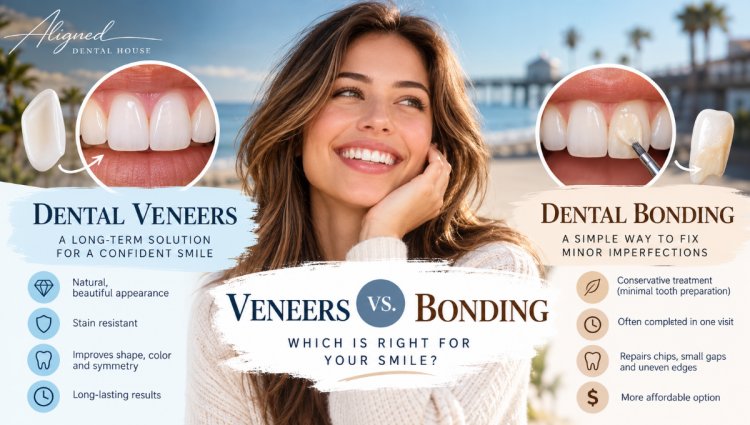
Dental veneers are thin, custom-made shells that cover the front surfaces of teeth. They are commonly made from porcelain and are designed to improve the appearance of tooth color, shape, size, and alignment.
Veneers are often recommended for patients who want to address multiple cosmetic concerns, such as persistent discoloration, uneven tooth shapes, worn edges, or minor gaps.
Benefits of Dental Veneers
Dental veneers offer several potential advantages:
-
Natural appearance: Porcelain can closely resemble the light-reflecting qualities of natural enamel.
-
Stain resistance: Porcelain generally resists staining better than composite resin.
-
Consistent results: Veneers can create a more uniform appearance across several front teeth.
-
Long-lasting improvement: With appropriate care, porcelain veneers often last 10–15 years or longer.
However, traditional veneers usually require removing a small amount of enamel. This process is generally irreversible, so patients should carefully consider the long-term commitment before proceeding.
Your dentist will also evaluate your gums, existing restorations, bite, and overall oral health to determine whether veneers are appropriate.
Learn more about available treatments on the General and Cosmetic Dentistry page at Aligned Dental House.
What Is Dental Bonding?
Dental bonding is a cosmetic procedure that uses tooth-colored composite resin to repair or reshape teeth. The dentist applies the resin, carefully molds it to the desired shape, hardens it with a special curing light, and polishes it to create a smooth finish.
Bonding is commonly used to repair small chips, conceal minor imperfections, reshape uneven edges, and close certain small gaps between teeth.
Benefits of Dental Bonding
Dental bonding is a popular option for patients who want to improve their smiles without extensive treatment.
Its potential benefits include:
-
Conservative treatment: Bonding often requires little or no removal of natural tooth structure.
-
Convenience: Many simple bonding procedures can be completed in one appointment.
-
Versatility: Composite resin can repair chips, reshape teeth, and improve selected cosmetic imperfections.
-
Lower initial cost: Bonding typically costs less per tooth than porcelain veneers.
Are There Any Limitations?
Composite resin can stain, wear down, or chip over time. Its longevity depends on the size and location of the restoration, your bite, oral hygiene, and habits such as nail-biting or chewing ice.
Bonding may also require periodic polishing, repair, or replacement to maintain its appearance.
For additional advice about protecting your smile, read this guide to common dental problems and how to prevent them.
Dental Veneers vs. Bonding: What Is the Difference?
Both treatments can improve the appearance of natural teeth, but the right choice depends on the type of correction needed and your long-term expectations.
1. Appearance and Aesthetics
Veneers can help create a consistent appearance across multiple teeth, particularly when correcting discoloration or uneven shapes. Porcelain offers excellent color stability and can closely mimic natural enamel.
Bonding can also produce natural-looking results, especially for repairing a single chipped tooth or making a small adjustment. The dentist carefully selects the resin shade to match your surrounding teeth.
Neither treatment guarantees a perfect result. Material selection, clinical technique, and proper treatment planning all influence the final appearance.
2. Durability and Maintenance
Porcelain veneers commonly last around 10–15 years or longer with proper care, while composite bonding may last approximately 3–10 years. These are general estimates, not guarantees.
Both treatments benefit from regular dental examinations, daily brushing and flossing, and avoiding habits that place excessive pressure on your teeth. Patients who grind or clench their teeth may benefit from a custom night guard.
Explore how to maintain healthy teeth and gums for practical oral hygiene advice.
3. Cost and Treatment Time
Bonding generally has a lower initial cost and can often be completed in one visit. Veneers typically cost more because they may involve tooth preparation, digital scans or impressions, laboratory fabrication, and a separate placement appointment.
Actual costs vary depending on the number of teeth treated, materials, case complexity, and dental provider fees. Ask your dentist for an individualized estimate that includes follow-up care and possible maintenance.
4. Tooth Preparation and Preservation
Bonding usually preserves more natural tooth structure. Traditional veneers generally require some enamel removal to create room for the shells and achieve a natural fit.
If preserving enamel is important to you, ask whether bonding or another minimally invasive option could meet your goals.
Which Treatment Should You Choose?
The best option depends on your teeth, oral health, budget, and desired results.
Veneers may be worth considering if you want to improve several front teeth, address significant discoloration, or create a more uniform smile. Bonding may be suitable for a small chip, a minor gap, or an isolated tooth that needs reshaping.
Before recommending either procedure, your dentist should assess your enamel, gums, bite, and existing dental work. Active tooth decay or gum disease may need treatment before cosmetic procedures begin.
If you are searching for a cosmetic dentist Huntington Beach patients can consult about smile enhancement, a personalized evaluation at Aligned Dental House can help you compare suitable options.
Choosing a trusted dentist Huntington Beach CA residents can visit for ongoing care is equally important. Regular dental checkups help identify concerns early and support the long-term health of your teeth and gums.
You can learn more about the practice by visiting the Aligned Dental House team page or exploring its complete range of dental services.
For families, a family dentist Huntington Beach residents can rely on may help coordinate preventive and restorative care for different age groups. Patients looking for a pediatric dentist Huntington Beach families can consult or an orthodontist Huntington Beach specialist can also explore the practice's services to understand which treatments are appropriate for their needs.
People researching dental implants Huntington Beach providers should remember that implants address missing teeth, whereas veneers and bonding primarily improve the appearance or structure of existing teeth. These treatments serve different purposes and are not interchangeable.
For more guidance on selecting a dental provider, read How to Choose the Right Family Dentist in Huntington Beach.
Frequently Asked Questions
1. Are veneers better than bonding?
Neither option is best for everyone. Veneers may be suitable for broader cosmetic changes and greater stain resistance, while bonding is often appropriate for smaller repairs and conservative reshaping. Your dentist can help determine which treatment suits your needs.
2. Does dental bonding damage natural teeth?
Bonding is generally conservative and often requires little or no enamel removal. However, preparation varies depending on the tooth and the desired result. Your dentist should explain the procedure before treatment begins.
3. How long do veneers and bonding last?
Porcelain veneers often last around 10–15 years or longer, while composite bonding may last approximately 3–10 years. Actual longevity varies according to oral hygiene, biting forces, diet, and maintenance.
4. Can dental bonding close gaps between teeth?
Yes. Bonding can close certain small gaps by adding tooth-colored resin to the sides of teeth. Larger gaps or spacing caused by alignment problems may be better addressed through orthodontic treatment.
5. Can I get veneers if I grind my teeth?
Possibly, but grinding can increase the risk of chipping or damaging veneers. Your dentist may recommend managing the grinding habit and using a custom night guard to help protect your teeth and restorations.
Improve Your Smile With Aligned Dental House
Dental veneers and bonding can both enhance your smile when used appropriately. Veneers may provide a longer-lasting cosmetic solution for certain concerns, while bonding offers a conservative and often more affordable approach to smaller imperfections.
The first step is a professional dental examination and a conversation about your goals, budget, and expectations.
If you are considering cosmetic dentistry in Huntington Beach, Aligned Dental House can help you explore available options and understand which treatments may be suitable for your smile.
Ready to take the next step? Contact Aligned Dental House to schedule a consultation and discuss your cosmetic dentistry options.
About Aligned Dental House
Aligned Dental House
Address: 6432 Bolsa Avenue, Huntington Beach, CA 92647
Phone: (714) 891-5245
Email: admin@alignbyme.com
Website: https://www.aligneddentalhouse.com/
What's Your Reaction?