Early Signs of Gum Disease: Symptoms You Should Never Ignore
Learn the early signs of gum disease, including bleeding gums, swelling, and bad breath. Discover prevention tips and when to visit Aligned Dental House in Huntington Beach, CA.
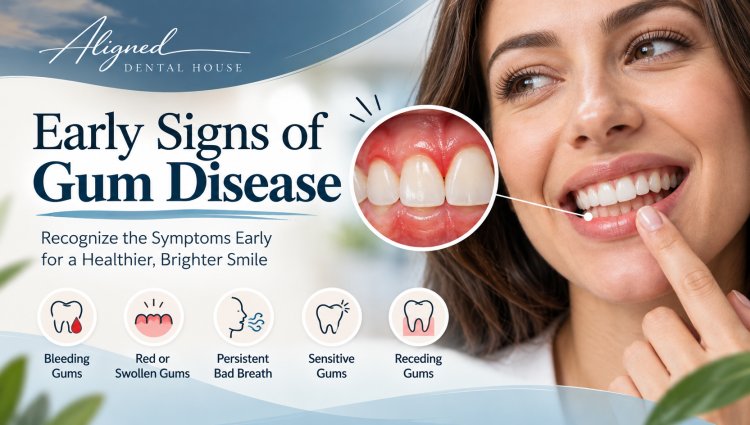
Healthy gums are the foundation of a healthy smile. However, many people overlook changes in their gums until they experience discomfort, bleeding, or other noticeable problems. Recognizing the early signs of gum disease can help you protect your teeth, maintain good oral hygiene, and prevent more serious dental complications.
Gum disease is a common oral health condition that can affect people of different ages. The good news is that early-stage gum disease is often manageable with proper dental care and consistent oral hygiene habits.
At Aligned Dental House, we believe that understanding your oral health is an important step toward maintaining a confident, healthy smile. In this guide, you'll learn about the early symptoms of gum disease, its common causes, prevention tips, and when to visit a dentist.
What Is Gum Disease?
Gum disease, also known as periodontal disease, is an infection and inflammation of the tissues surrounding and supporting your teeth. It usually begins when plaque, a sticky film of bacteria, builds up along the gumline.
If plaque is not removed regularly, it can harden into tartar, which cannot be removed through ordinary brushing alone.
Gum disease generally develops in two stages:
1. Gingivitis: The Early Stage
Gingivitis is the earliest stage of gum disease. It can cause redness, swelling, tenderness, and bleeding gums, particularly when brushing or flossing.
At this stage, the damage is generally reversible with improved oral hygiene and professional dental care.
2. Periodontitis: The Advanced Stage
When gingivitis is left untreated, it may progress to periodontitis. This more serious condition affects the tissues and bone that support your teeth.
Advanced gum disease can cause gum recession, loose teeth, bone loss, and eventually tooth loss. Early diagnosis and treatment can help reduce the risk of these complications.
7 Early Signs of Gum Disease to Watch For
Gum disease does not always cause pain in its early stages. Paying attention to subtle changes in your mouth can help you seek care before the condition becomes more serious.
1. Bleeding Gums While Brushing or Flossing
One of the most common early signs of gum disease is bleeding during brushing or flossing.
You may notice pink or red marks on your toothbrush, blood when spitting out toothpaste, or bleeding while cleaning between your teeth.
Although brushing too aggressively can also cause bleeding, frequent or unexplained bleeding may indicate gum inflammation. Do not stop flossing altogether; instead, clean gently and arrange a dental evaluation if the problem continues.
2. Red or Swollen Gums
Healthy gums are generally firm and fit closely around your teeth. Inflamed gums may appear red, puffy, shiny, or unusually swollen.
These changes often occur when plaque bacteria irritate the gum tissue.
If your gums look different from usual, especially around the gumline, consider scheduling a dental checkup. A professional examination can help identify the cause.
3. Persistent Bad Breath
Bad breath, also called halitosis, can develop when bacteria accumulate in the mouth and release unpleasant-smelling compounds.
You might notice that your breath remains unpleasant even after brushing, flossing, or using mouthwash.
Bad breath can have several causes, including dry mouth, food debris, and dental infections. If it persists despite good oral hygiene, your dentist can assess whether gum disease or another oral health concern is responsible.
4. Tender or Sensitive Gums
Gum inflammation can make the tissues around your teeth feel tender or uncomfortable when you brush, floss, or eat certain foods.
Some people experience mild soreness, while others notice discomfort when touching the gumline.
Persistent tenderness should not be ignored, particularly when accompanied by swelling, bleeding, or redness.
5. Receding Gums
Have your teeth started looking longer than usual? Gum recession occurs when the gum tissue moves away from the tooth, exposing more of its surface.
This may make your teeth appear longer and can expose sensitive root surfaces.
Gum recession can be associated with periodontal disease, aggressive brushing, or other factors. Because lost gum tissue does not generally grow back on its own, early assessment is important.
6. Persistent Bad Taste in Your Mouth
A lingering unpleasant taste can sometimes accompany gum inflammation or bacterial buildup.
You may notice a bitter or unpleasant taste even after brushing your teeth.
Although this symptom alone does not confirm gum disease, it deserves attention if it occurs alongside bleeding gums, persistent bad breath, or swelling.
7. Changes in the Way Your Teeth Fit Together
As gum disease advances, damage to the supporting tissues and bone may affect tooth stability.
You might notice that your bite feels different, your teeth appear to shift, or a tooth feels loose.
These symptoms can indicate a more advanced dental problem and should be evaluated promptly. Loose adult teeth are never something to ignore.
What Causes Gum Disease?
The primary cause of gum disease is plaque buildup, but several factors can increase your risk.
Common contributing factors include:
-
Poor oral hygiene: Infrequent brushing or flossing allows plaque to accumulate.
-
Smoking and tobacco use: Tobacco can increase the risk of gum disease and interfere with healing.
-
Diabetes: Poorly controlled blood sugar can increase susceptibility to gum infections.
-
Hormonal changes: Pregnancy and certain other hormonal changes can make gums more sensitive to inflammation.
-
Certain medications: Some medications can affect saliva production or gum tissue.
-
Family history: Genetics may influence your susceptibility to periodontal problems.
Understanding your risk factors can help you and your dentist develop a suitable prevention plan.
How to Prevent Gum Disease
Consistent daily habits can make a meaningful difference in maintaining healthy gums.
Brush Twice a Day
Brush your teeth twice daily using a soft-bristled toothbrush and fluoride toothpaste. Use gentle circular motions along the gumline, taking care not to brush too aggressively.
Floss Every Day
Flossing helps remove plaque and food particles from between your teeth, where a toothbrush cannot reach effectively.
If traditional floss is difficult to use, ask your dental professional about interdental brushes or other suitable cleaning aids.
Schedule Regular Dental Checkups
Professional dental examinations help identify gum inflammation and other oral health concerns before they become more serious.
Regular professional cleanings also remove hardened tartar that cannot be eliminated with home brushing alone. Learn more about how often you should get a dental cleaning.
Maintain a Balanced Diet
Eat a balanced diet that includes vegetables, fruits, whole grains, and other nutrient-rich foods. Limit frequent sugary snacks and drinks, which can contribute to oral health problems.
Avoid Tobacco Products
Avoiding smoking and other tobacco products can help protect your gums and support better healing.
For additional guidance, explore our article on how to maintain healthy teeth and gums.
When Should You See a Dentist for Gum Disease?
Do not wait for gum pain to become severe before seeking dental care. Contact a dentist if you experience recurring bleeding, persistent swelling, gum recession, ongoing bad breath, or tenderness that does not improve.
If you notice loose teeth, pus around your gums, significant swelling, or pain when chewing, seek prompt dental evaluation. Facial swelling accompanied by difficulty breathing or swallowing requires emergency medical care.
At Aligned Dental House, patients can explore periodontal care and other dental services to learn about available options for protecting their oral health.
Treatment depends on the severity of the condition and may include professional cleaning, deep cleaning (scaling and root planing), or other periodontal procedures when necessary.
You can also read our guide to common dental problems and how to prevent them for more practical oral health advice.
Frequently Asked Questions About Early Signs of Gum Disease
1. What is the first sign of gum disease?
Bleeding gums during brushing or flossing are a common early warning sign. Redness, swelling, and tenderness may also indicate gingivitis.
2. Can gum disease go away on its own?
Gum disease should not be expected to disappear without appropriate care. Early gingivitis can often be reversed with effective oral hygiene and professional treatment. Advanced periodontitis requires dental management.
3. Can you have gum disease without pain?
Yes. Early gum disease is frequently painless, which is why regular dental examinations are important even when your teeth and gums feel normal.
4. How can I prevent gum disease at home?
Brush twice daily with fluoride toothpaste, clean between your teeth every day, avoid tobacco, eat a balanced diet, and attend regular dental checkups and professional cleanings.
5. When should I visit a dentist for bleeding gums?
If your gums bleed repeatedly, appear swollen, or remain tender, schedule a dental appointment rather than ignoring the symptoms. Seek prompt care if bleeding occurs with significant swelling, pus, or loose teeth.
Protect Your Smile With Aligned Dental House
Healthy gums are essential for keeping your natural teeth strong and supporting long-term oral health. Recognizing the early signs of gum disease, maintaining good oral hygiene, and visiting your dentist regularly can help you address problems before they progress.
If you have noticed bleeding gums, persistent bad breath, swelling, or other changes, consider scheduling a professional evaluation.
Aligned Dental House provides comprehensive dental care, including periodontal services, in a welcoming environment designed around patient comfort and personalized treatment.
Visit our About Us page to learn more about our approach to dental care, or contact Aligned Dental House to request an appointment.
Aligned Dental House
6432 Bolsa Avenue, Huntington Beach, CA 92647
Phone: (714) 891-5245
Email: admin@alignbyme.com
Website: https://www.aligneddentalhouse.com/
Take the next step toward healthier gums and a more confident smile with professional dental care.
What's Your Reaction?